18 (2025), nr 2
s. 171–196
https://doi.org/10.56583/fs.2833
Licencja CC BY-NC-SA 4.0
ISSN: 1899-3109; eISSN: 2956-4085
Z PROBLEMATYKI PSYCHOLOGICZNEJ
PSYCHOLOGICAL ISSUES
Dr. Bernard Panasiuk
Academy of Zamość
e-mail: bernard.panasiuk@akademiazamojska.edu.pl
https://orcid.org/0000-0002-2610-2596
Magdalena Panasiuk-Kwiatek
Maria Curie-Skłodowska University in Lublin
e-mail: magdalena.panasiuk-kwiatek@umcs.pl
https://orcid.org/0000-0001-8092-4454
Sztuczna inteligencja w życiu osobistym i zawodowym: spostrzeżenia studentów
Summary
This article presents the results a survey on the use of artificial intelligence (AI) technologies by students from the Humanitas Academy in Sosnowiec, the Academy of Zamość, and Maria Curie-Skłodowska University in Lublin. The study was conducted in 2024 via a questionnaire, with a total sample of 514 respondents. The descriptive analysis of the data examined the extent and frequency of AI tools usage, their areas of application, the perceived usefulness of selected solutions, and the benefits and concerns related to the development of these technologies. Particular attention was given to evaluating the impact of AI on the labor market, future skills requirements, and expected changes in employment. The results indicate the growing presence of AI in students’ lives and highlight the need to further develop digital competencies in the response to dynamic socio-professional changes.
Keywords: competencies for the future; technology management; student perceptions; artificial intelligence (AI); labor market
Streszczenie
Celem niniejszego artykułu jest prezentacja wyników autorskiego badania dotyczącego wykorzystania technologii opartych na sztucznej inteligencji (AI) przez studentów Akademii Humanitas w Sosnowcu, Akademii Zamojskiej oraz Uniwersytetu Marii Curie-Skłodowskiej w Lublinie. Badanie zostało przeprowadzone w 2024 roku z zastosowaniem kwestionariusza ankietowego, a próba objęła łącznie 514 respondentów. Analiza danych miała charakter opisowy i uwzględniała m.in. zakres i częstotliwość korzystania z narzędzi AI, obszary ich zastosowania, ocenę przydatności wybranych rozwiązań, a także postrzegane korzyści i obawy związane z rozwojem technologii inteligentnych. Szczególną uwagę poświęcono ocenie wpływu AI na rynek pracy, wymagania kompetencyjne oraz przewidywane zmiany w obszarze zatrudnienia. Uzyskane wyniki wskazują na rosnącą obecność sztucznej inteligencji w życiu studentów oraz potrzebę dalszego wspierania rozwoju kompetencji cyfrowych w kontekście dynamicznych przemian społeczno-zawodowych.
Słowa kluczowe: kompetencje przyszłości; zarządzanie technologią; postawy studentów; sztuczna inteligencja (AI); rynek pracy
A prerequisite for the comprehensive development of a modern state is the application of the latest technological advances in all areas of its economy. These certainly include the systemic implementation of artificial intelligence (AI). Societies that can effectively implement the latest technologies related to the acquisition, collection, analysis and processing of data using algorithmic techniques will be able to count on a faster pace of development, a higher performing economy, and thus an increase in their citizens’ wealth.
The aim of this article is to present the results of research on the perception and use of AI-based technologies in the personal and professional lives of university students. The study examines students’ attitudes towards AI, including the frequency of their use of intelligent tools, their areas of application, and the identified benefits and concerns related to the development of this technology. The study was conducted in 2024 using a diagnostic survey method via a questionnaire (CAWI) on a sample of 514 respondents, including students of the Humanitas Academy in Sosnowiec, the Academy of Zamość, and Maria Curie-Skłodowska University in Lublin.
The following part of the article discusses selected definitional approaches to artificial intelligence and adopts one of them as the basis for further analysis.
To date, many attempts have been made to define the term artificial intelligence. However, a legal definition, governed by national laws or international conventions, has not yet been established. One compromise solution is the adoption by the Organization for Economic Co-operation and Development (OECD) of a description of artificial intelligence as an AI system, which is based on the concept of a machine that can influence its environment by making recommendations, predictions, or decisions for a given set of goals1. The European Parliament and Council Regulation, in turn, defines the concept of an artificial intelligence system as
a machine-based system that is designed to operate with varying levels of autonomy and that may be adaptive once deployed and that, for explicit or implicit purposes, makes inferences based on received inputs about how to generate outputs such as predictions, content, recommendations or decisions that may affect the physical or virtual environment.2
Artificial intelligence enables information systems to use input data or information received through electronic receptors, collect it, process it accordingly and respond appropriately to a given situation.
Artificial intelligence (AI) is also defined as the field of science and technology concerned with creating systems capable of performing tasks that normally require human intelligence, such as learning, reasoning, pattern recognition and decision-making.3 According to Andreas Kaplan and Michael Haenlein, artificial intelligence is “the ability of a system to correctly interpret external data, learn from it, and use the acquired knowledge to achieve specific goals through flexible adaptation.”4
According to Tomasz Zalewski, it is a system that “exhibits intelligent behavior by analyzing its environment and taking action, to some extent autonomously, to achieve specific goals.”5 Furthermore, it should be emphasized that AI is “the intelligence exhibited by devices (as opposed to natural intelligence). It can be complemented by the characteristics of intelligence as such, i.e.: the ability to understand, learn and apply the knowledge and skills it possesses to new situations.”6
Often, artificial intelligence
[...] attempts to define it as a field of knowledge encompassing neural networks, robotics and the creation of models of intelligent behavior and computer programs that simulate this behavior, as well as machine learning, deep learning and reinforcement learning.7
For the purposes of this study, the authors adopted the definition proposed by A. Kaplan and M. Haenlein. This definition was selected because it combines both technical and functional elements while remaining understandable from the perspective of end users. This allows for an analysis of students’ perceptions not only in purely technological terms but also in the context of the practical applications of AI in their daily and professional life. This understanding of AI formed the basis for designing the research tool and interpreting the resulting data.
This article is part of a more extensive research project, the primary objective of which is to analyze the attitudes and practical use of AI-based technologies among university students. A diagnostic survey approach was employed to identify the opinions and attitudes of the study group regarding this phenomenon. The research technique was an online survey (CAWI – Computer-Assisted Web Interviewing), which allowed for efficient data collection from a large number of respondents. The research tool was a proprietary survey questionnaire, developed based on a review of the relevant literature and previous research on the application of artificial intelligence in education and professional work. The study was conducted from a pedagogical and managerial perspective, and its primary objective was to identify methods of using AI, the level of awareness regarding its capabilities and limitations, and to assess the impact of these technologies on students’ current and future professional lives. The study formulated the following research questions:
The research questionnaire was developed with two key considerations in mind: first, current trends in the application of artificial intelligence, and second, the needs of a quantitative analysis of user attitudes. The survey was divided into several sections, covering topics such as application areas, level of technology usage, identified benefits and threats, impact on professional competencies, and predictions regarding changes in the labor market. Furthermore, the incorporation of metric questions enabled the segmentation of respondents according to selected demographic and social characteristics. The research questionnaire comprised 15 closed questions, incorporating single-choice, multiple-choice, and Likert scale formats. The respondents were invited to evaluate a series of statements using a five-point scale, ranging from 1, representing “strongly disagree,” to 5, denoting “strongly agree.” The entire project was divided into four sections, as illustrated in Table 1, corresponding to the research problems posed.
|
No. |
Section |
Survey Item and Question |
Research Question |
|
1 |
Respondent Demographics |
M1 – Gender M2 – Age M3 – Degree of study M4 – Field of study M5 – Industry of employment. |
|
|
2 |
Frequency of AI Usage |
P2_1 – Do you use AI-based tools? P2_2 – How often do you use AI-based technologies in your daily life? |
Do students use AI-based technologies, and, if so, how often? |
|
3 |
Areas of AI Use and Tools |
P3_1 – Which of the following AI-based technologies have you used or are you currently using? P3_2 – Which AI-based tools do you find most helpful in your work? P3_3 – In what areas do you believe AI be most widely used? |
In what areas and which AI tools do students use most often? |
|
4 |
Benefits and Concerns Regarding AI’s Impact |
P4_1 – What are the main benefits of using AI-based technologies in your daily life? P4_2 – What are the main concerns related to using AI-based technologies? P4_3 – Do you think that the development of AI will affect your current/future professional work? P4_4 – Please, respond to the following statements regarding professional work. P4_5 – In your opinion, which professions will be most affected by the development of AI in the future? |
What benefits and concerns do students perceive regarding the impact of AI on everyday life and the labor market? |
|
|
The study was conducted between January and December 2024. The questionnaire was disseminated to students of the Humanitas Academy in Sosnowiec, the Academy of Zamość, and Maria Curie-Skłodowska University in Lublin. A total of N = 514 valid questionnaires were obtained. The data were analyzed using MS Excel 2019 and IBM SPSS Statistics (PS Imago Pro 10.0). The article focuses on a discussion of the results from the survey sections described above, which form the basis for assessing the level of adaptation of this technology in the student environment and its potential impact on the development of competencies and the preparation of students for the challenges of the labor market.
A total of 514 respondents participated in the study, representing a range of academic disciplines, levels of study, and levels of professional experience. The following section presents a comprehensive analysis of the research sample, divided into key demographic and educational categories (see Table 2).
| Variable |
Category |
N | Percentage (%) |
| Gender |
Female |
397 | 77.24 |
|
|
Male |
109 | 21.21 |
|
|
Prefer not to answer |
8 | 1.56 |
|
Degree of Studies |
Bachelor’s degree |
386 | 75.10 |
|
|
Master’s degree |
55 | 10.70 |
|
|
Doctoral degree |
1 | 0.19 |
|
|
Integrated Master’s degree |
11 | 2.14 |
|
|
Postgraduate studies |
61 | 11.87 |
| Field of Study |
Nursing |
112 | 21.79 |
|
|
Pedagogy |
78 | 15.18 |
|
|
Finance and Accounting |
63 | 12.26 |
|
|
Logistics |
51 | 9.92 |
|
|
English Studies |
34 | 6.61 |
|
|
Economic Analysis |
32 | 6.23 |
|
|
Management |
30 | 5.84 |
|
|
Teacher Preparation |
29 | 5.64 |
|
|
Economics |
23 | 4.47 |
|
|
Educational Administration |
22 | 4.28 |
|
|
Midwifery |
9 | 1.75 |
|
|
Other |
31 | 6.03 |
|
Industry of Employment |
Public Administration |
22 | 4.28 |
|
|
Education |
58 | 11.28 |
|
|
Retail and Commerce |
26 | 5.06 |
|
|
Media & Entertainment |
11 | 2.14 |
|
|
Healthcare |
43 | 8.37 |
|
|
Industry |
10 | 1.95 |
|
|
Financial Services |
20 | 3.89 |
|
|
Other |
52 | 10.12 |
|
|
Currently not working |
272 | 52.92 |
|
|
In terms of gender, the dominant group was female (N=397; 77.24%), while males constituted a significant minority (N=109; 21.21%). A small percentage of respondents preferred not to share their gender (N=8; 1.56%). With regard to the level of study, the majority of participants were enrolled in Bachelor’s degree programs (N=386; 75.10%). The remaining categories included students in postgraduate programs (N=61; 11.87%), Master’s degree programs (N=55; 10.70%), and integrated Master’s degree programs (N=11; 2.14%). Only one respondent (N=1; 0.19%) indicated that they were undertaking doctoral studies. The respondents represented a range of academic disciplines. The largest groups were students of nursing (N=112; 21.79%), pedagogy (N=78; 15.18%), finance and accounting (N=63; 12.26%) and logistics (N=51; 9.92%). Other fields of study included English Studies (N=34; 6.61%), economic analysis (N=32; 6.23%), management (N=30; 5.84%), teacher preparation (N=29; 5.64%), economics (N=23; 4.47%), educational administration (N=22; 4.28%) and midwifery (N=9; 1.75%). A total of 31 respondents (6.03%) indicated that they were studying other fields. These included: the art market and cultural management, mathematics, tourism and recreation, national security, psychology, dietetics, electrical engineering and computer science. Regarding professional activity, over half of the study participants were not employed at the time of the survey (N=272; 52.92%). The most prevalent employment sector among the surveyed population was education (N=58; 11.28%), followed by healthcare (N=43; 8.37%), retail and commerce (N=26; 5.06%), and public administration (N=22; 4.28%). The remaining sectors were: financial services (N=20; 3.89%), media and entertainment (N=11; 2.14%), manufacturing/industry (N=10; 1.95%) and other industries (N=52; 10.12%). In the "other" category, respondents indicated professions in the IT industry, the beauty industry, gastronomy, energy, agriculture, biotechnology, tourism, the legal sector, non-governmental organizations, entrepreneurship, and the arts.
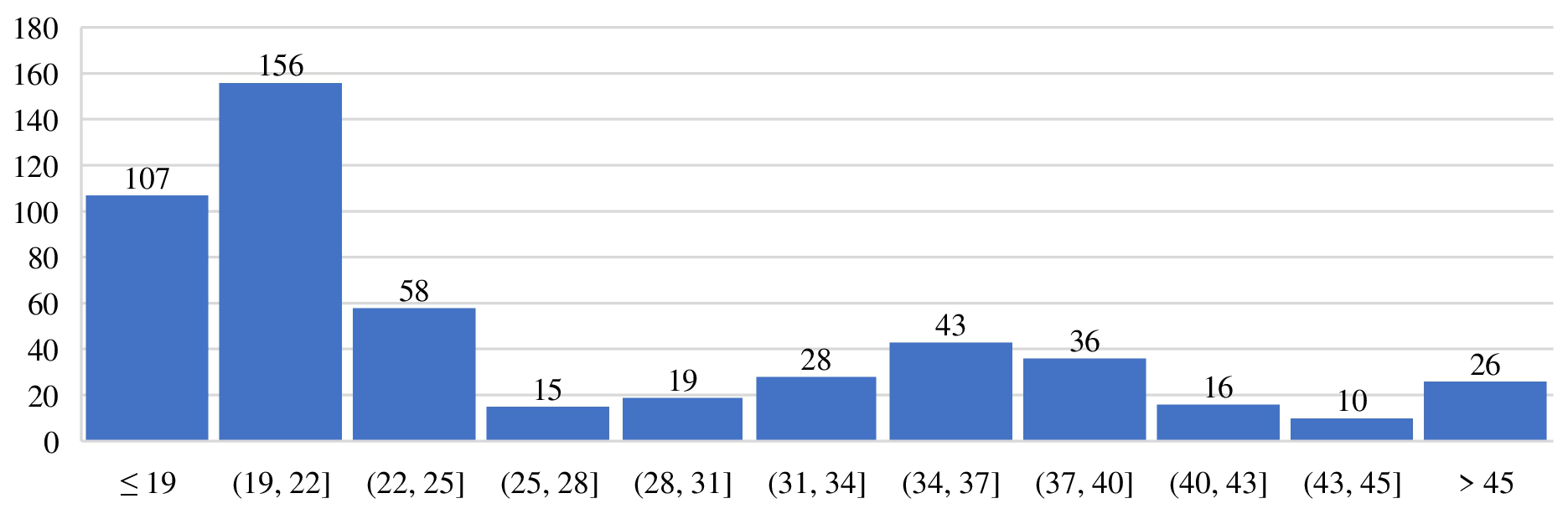
The histogram (Figure 1) shows the age distribution of respondents (N=514; 100%). The largest group consisted of students aged 19–22 (N=156; 30.35%), which is typical for students in the Bachelor’s degree programs. The second largest group consisted of students aged 19 and under (N=107; 20.82%), and the third group consisted of students aged 22–25 (N=58; 11.28%).
The number of respondents decreased with increasing age, but a notable increase was observed in the 34–37 age group (N=43; 8.37%), which may indicate the participation of working professionals undertaking postgraduate studies or continuing professional development. Other demographic groups with a significant share of responders were those aged between 37 and 40 years (N=36; 7.00%) and 31–34 years (N=28; 5.45%). The presence of respondents over the age of 45 (N=26; 5.06%) is also noteworthy, confirming the involvement of older individuals in the educational process. The remaining age groups were represented by fewer participants: 28–31 years (N=19; 3.70%), 25–28 years (N=15; 2.92%), 40–43 years (N=16; 3.11%) and 43–45 years (N=10; 1.95%).
The sample characteristics indicate a significant internal diversity among the study participants, both in terms of their educational profiles and professional experience. This diverse sample facilitates a multidimensional analysis of the perception and use of artificial intelligence in students’ daily lives and in the context of their preparation for the labor market.
The data analysis was descriptive in nature. It involved calculating the frequency of occurrence for individual responses and their corresponding percentages relative to the total number of respondents. The results were presented in tables and bar chart, which allowed for the visualization of trends in the studied sample. This procedure enabled the identification of dominant attitudes, the frequency of AI technology use, and perceived benefits and concerns.
The integration of artificial intelligence into the contemporary technological environment is becoming increasingly pervasive, encompassing both educational and professional spheres. The increasing availability of AI-based tools means that users – often unconsciously – employ them in various domains of everyday life.8 An analysis of the scale of use of these technologies facilitates a deeper understanding of the level of their adoption, as well as the level of awareness surrounding their functions and applications. It is imperative to analyze the frequency with which students use AI-based solutions, the domains in which they employ them, and their expectations regarding the impact of AI on their professional futures. This section of the article presents the respondents’ answers regarding the scope, intensity and expected consequences of using AI, which can act as an important guide for designing educational and strategic initiatives in higher education.
The vast majority of respondents (Figure 2) reported using technologies based on artificial intelligence (N=333; 64.79%). A significant group of respondents was uncertain, choosing option “Unsure” (N=75; 14.60%). A negative answer (“No”) was given by 106 responders (N=106; 20.61%). These results suggest that the use of artificial intelligence is common among the surveyed students, but some of them may not be aware that the tools they use qualify as AI solutions.
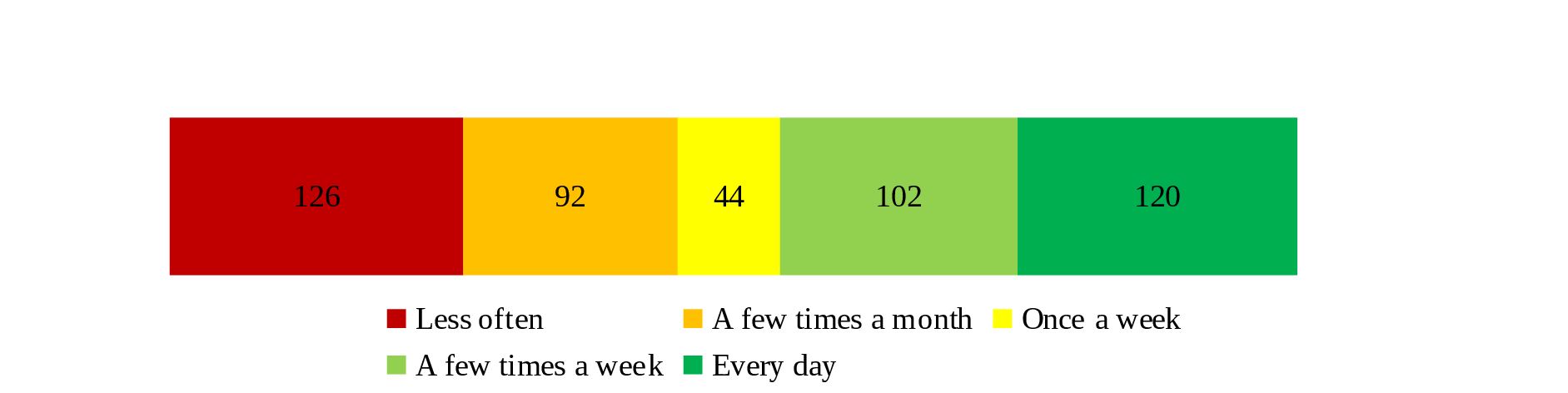
The frequency of AI-based technology usage among students varies significantly (see Figure 3). The largest group of respondents (N=126; 24.51%) reported using such solutions sporadically (i.e. less than once a month). However, a considerable proportion of the participants indicated that they engage with AI tools on a daily basis (N=120; 23.35%) or several times a week (N=102; 19.84%), suggesting that almost half of the student population has regular interaction with AI tools. The responses “A few times a month” (N=92; 17.90%) and “Once a week” (N=44; 8.56%) were less prevalent. Thirty responders (N=30; 5.84%) did not provide a response. Considering the preceding question, in which 64.79% of respondents indicated their use of AI, this suggests that while this technology is present in the lives of the majority of students, for a considerable number of them its use is incidental. This may be indicative of the fact that AI is employed primarily on an ad hoc basis, for instance in the domains of translation, information retrieval, or content creation, as opposed to its use as a systematic support tool within learning or professional contexts.
Although most students use AI tools, the intensity of their use still varies, largely depending on educational needs. A KPMG report describes similar findings, indicating that while students commonly use AI in their studies, only a minority report using it regularly9.
In summary, most students have contact with AI tools, although the intensity of their use varies from sporadic to daily. Data suggests that AI serves more as a support for everyday activities than as a permanent educational or professional tool.
The integration of contemporary tools based on artificial intelligence is becoming increasingly pervasive in the daily lives of students, both within the educational sphere and in their professional pursuits. As indicated by the literature, the adoption of AI by users is contingent on the extent to which tools meet their currents needs in terms of usability and availability.10 The analysis of the data obtained in the study enables the determination of the types of AI technologies that are actually used by students, as well as the professions that they perceive to be most susceptible to transformation as a result of the development of artificial intelligence. This section also presents an assessment of the usefulness of selected AI tools in their work and studies.
The most frequently cited technology based on artificial intelligence was undoubtedly automatic language translation (N=382; 74.32%), which indicates the widespread use of AI tools in the context of linguistic communication (Figure 4. N=514=100% – multiple choice was possible). The subsequent most prevalent responses were chatbots and virtual assistants (N=265; 51.56%) and filters in applications for processing photos, videos, and music (N=256; 49.81%), which may signify both educational and recreational applications of AI in the lives of students. As indicated by the respondents, automatic recognition of images and biometric data was selected by 33.07% of respondents (N=170), and recommendation systems by 27.63% (N=142). As shown in Figure 4, technologies related to computer games (N=114; 22.18%) and autonomous vehicles (N=94; 18.29%) were less popular. A comparatively low proportion of responders selected data processing and predictive analysis tools (N=64; 12.45%) and responses categorized as "other" (N=4; 0.78%).
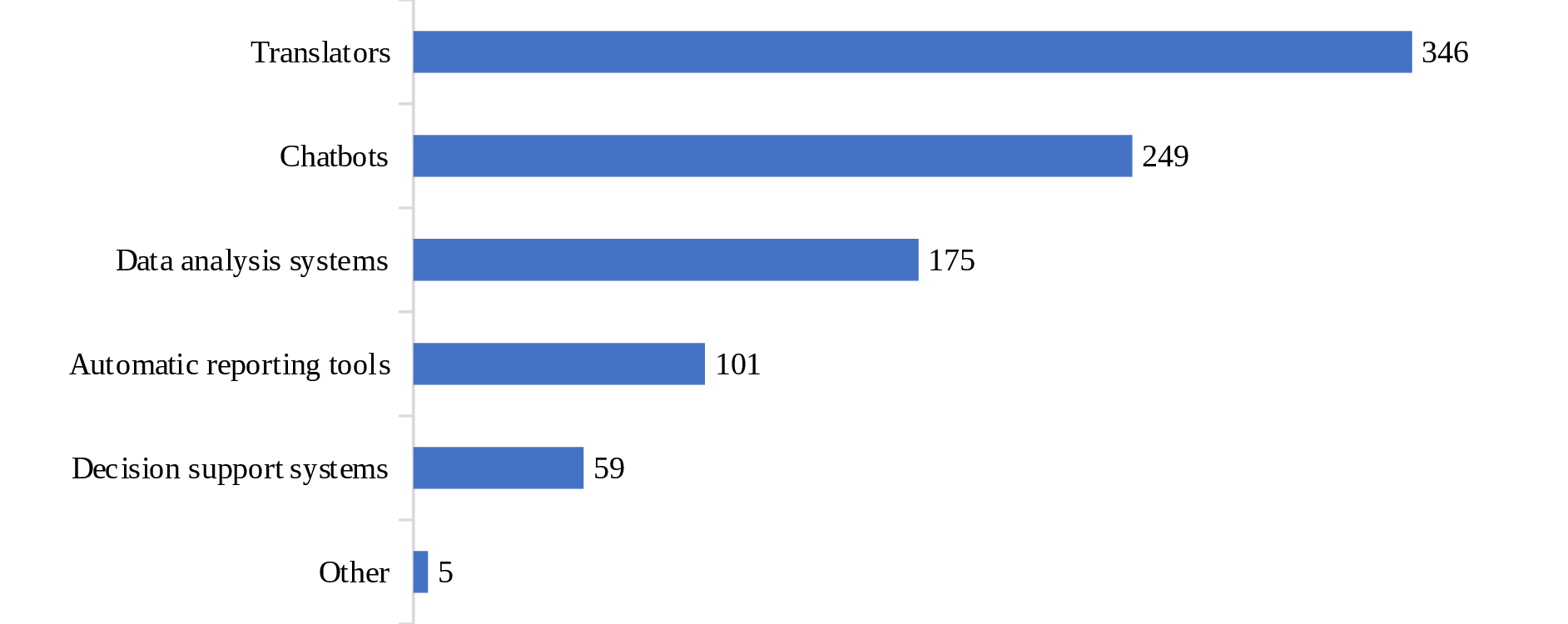
Figure 5 presents student responses to the question regarding the AI-based tools they consider the most helpful for work or study (N=514=100% – multiple choice was available). Translators were cited most often (N=346; 67.32%), which confirms the dominant role of automatic translation in the academic and professional environment. Chatbots were the second most popular choice (N=249; 48.44%), a popularity that may be attributable to their accessibility, ease of use and extensive range of applications. In the present study, data analysis systems were selected by 175 respondents (N=175; 34.05%). Automatic reporting tools (N=101; 19.65%) and decision support systems (N=59; 11.48%) were selected less frequently. The category labeled "other" comprised a small number of answers (N=5; 0.97%).
Figure 6 illustrates the domains of AI application according to respondents. The technical and analytical fields were cited most frequently, a finding that is corroborated by the high proportion of selection for “Computer science and computer science” (N=408; 79.37%) and “Mathematics and statistics” (N=312; 60.70%). Furthermore, a considerable proportion of students recognized the potential of AI in various fields, including “Economics and finance” (N=233; 45.33%), “Foreign languages” (N=205; 39.88%), and “Engineering” (N=172; 33.46%). The respondents subsequently indicated the following fields of study: “Education” (N=165; 32.10%), “Biology and medicine” (N=124; 24.13%) and “Arts and humanities” (N=61; 11.87%). In contrast, less popular responses included “Psychology and social sciences” (N=51; 9.92%) and “Other” (N=6; 1.17%), which may include fields that are difficult to classify clearly.
The dominance of translators and chatbots stems from their immediate usefulness. For example, in a US study, students cited features such as feedback and learning support as the most valued aspects of educational chatbots.11
The analysis shows that translators and chatbots are the most frequently used AI tools, reflecting students’ needs for communication and rapid access to information. The most commonly identified application areas include computer science and mathematics, indicating that AI is primarily perceived as a tool for supporting technical and analytical tasks.
The study’s findings reveal that the perception of AI by end users extends beyond mere functional aspects, encompassing an evaluation of the technology’s potential benefits, risks, and its projected impact on the labor market and professional requirements. The literature highlights that the implementation of AI has the potential to have both utilitarian and transformative effects.12 This section presents responses regarding the reported benefits and concerns related to AI, as well as an assessment of its impact on competency requirements and the structure of the labor market.
Students perceive a number of specific benefits from the use of AI-based technologies in everyday life (Figure 7). The most frequently cited benefits were convenience and streamlining of everyday activities, such as ordering food or booking tickets (N=365; 71.01%). Almost as often, respondents cited time savings, understood as speeding up the execution of tasks and automating repetitive activities (N=361; 70.23%). Another important category of benefits was facilitated communication, including automatic language translation or the use of voice assistants (N=213; 41.44%). The personalization of services, i.e., adapting content and offers to individual user preferences, was indicated by 159 respondents (N=159; 30.93%).
A relatively small number of respondents reported no experience with AI technologies (N=25; 4.86%), while the answer categorized as "other" was selected by only one respondent (N=1; 0.19%).
In summary, students recognize clear benefits of AI use, particularly in terms of convenience, time savings, and easier communication. The findings suggest that artificial intelligence is perceived as a technology that streamlines everyday life and enhances task efficiency. According to the UK HEPI survey, there is a sharp increase in the use of generative AI, reflecting the growing perception of its usefulness.13
Students reported a broad spectrum of concerns regarding the development and use of artificial intelligence (see Figure 8). The most frequently cited threat was dependence on technology, i.e., the fear of excessive reliance on automatic systems in daily life (N=349; 67.90%). Another prominent concern was unemployment and changes in the labor market resulting from automation and the potential displacement of some professions by AI technologies (N=267; 51.95%). Furthermore, a considerable proportion of respondents (N=242; 47.08%) identified threats related to the security of data and systems, while a similar number (N=211; 41.05%) cited privacy breaches as a significant concern. Concerns regarding a lack of control over and understanding of how AI operates were cited by 182 respondents (N=182; 35.41%). Responses regarding biases and algorithmic injustice (N=98; 19.06%), ethical dilemmas (N=96; 18.68%), and the costs and availability of technology (N=77; 14.98%) were less frequent. The category “other” was selected infrequently (N=3; 0.58%). These findings suggest that students are aware of the many risks associated with the implementation of AI systems. Social and existential risks appear to be of particular concern.
In summary, students expressed a broad range of concerns about AI, primarily focused on excessive dependence on technology, threats to the labor market, and data security. These concerns reflect an increasing awareness of the social and ethical risks associated with technological development. These same fears were documented in a study by Griffin Pitts et al., in which respondents cited, among other things, the risk of losing the ability to solve problems independently and threats related to data storage and misuse.14 Haotian Zhu, in his systematic literature review, emphasizes that these concerns include the risk of deepening educational inequalities, a lack of accountability in the operation of AI systems, and conflicts of interest—thus providing a better understanding of the broader context of the ethical concerns expressed by students.15
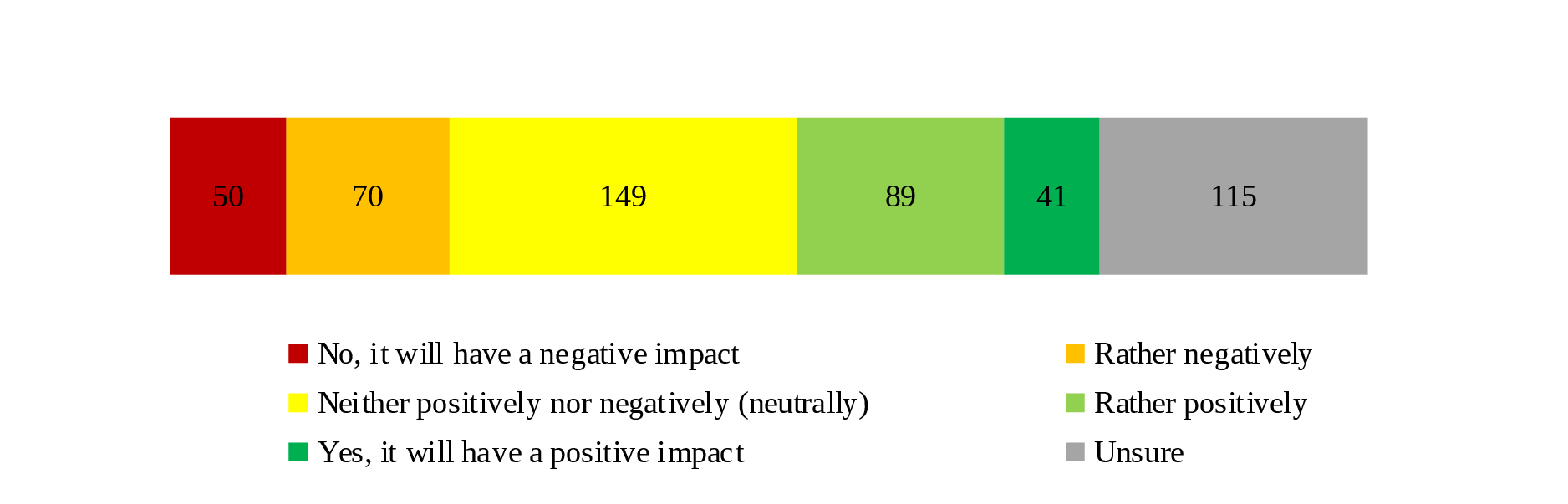
As illustrated in Figure 9, students expressed a range of perspectives on the implications of AI for their future professional careers. The largest group of respondents adopted a neutral stance, selecting either “Neither positively nor negatively” (N=149; 28.99%) or “Unsure” (N=115; 22.37%), which may suggest a lack of certainty about the direction and scale of changes caused by the development of AI in the labor market. A total of 130 respondents provided positive responses, of which 89 indicated a favorable response, categorized as “Rather positive” view (N=89; 17.32%), and 41 respondents expressed a “Definitely positive” view (N=41; 7.98%). A total of 120 respondents expressed negative assessments, with 70 (13.62%) choosing “Rather negatively” and 50 (9.73%) choosing “Definitely negative.”
In summary, most students adopt neutral or uncertain attitudes regarding the impact of AI on their professional future. At the same time, there is a balance between expectations of positive and negative consequences, highlighting the ambivalent nature of students’ perceptions of this technology. In a study conducted by the team of Ruihua Li et al., it was observed that reduced trust in AI translates into increased anxiety related to job searching – which may indicate the emotional and cognitive dimension of this ambivalence16.
Figure 10 presents the distribution of responses to five statements regarding the impact of artificial intelligence on competency requirements and professional experiences of students, using a five-point Likert scale and an additional option “Unsure.”
The most persuasive statement was “Artificial intelligence will replace some jobs in the future,” with which a total of 306 respondents agreed or strongly agreed (N=128 + N=178; 59.53%). Conversely, only 68 respondents (N=28 + N=40; 13.23%) expressed a disagreeing perspective, while 99 respondents maintained a neutral stance (N=99; 19.26%). Only 40 respondents (N=40; 7.78%) selected the “Unsure” option. The statement “I feel the need for additional education or training in the use of AI-based tools” also received significant agreement. A total of 173 respondents agreed with this statement (N=97 + N=76; 33.66%), while 110 were neutral (N=110; 21.40%), and 178 disagreed (N=92 + N=86; 34.63%). In this case, 52 respondents selected the “Unsure” option (N=52; 10.12%). For the statement “Artificial intelligence facilitates my daily professional tasks,” the distribution of responses was more even: 175 respondents expressed agreement (N=98 + N=77; 34.05%), 155 people expressed disagreement (N=84 + N=71; 30.16%), and 128 people remained neutral (N=128; 24.90%). The response “Unsure” was selected by 55 respondents (N=55; 10.70%). The greatest uncertainty was observed in relation to the statement “Artificial intelligence will have a positive impact on the structure of the labor market in my industry,” where 106 respondents selected the answer “Unsure” (N=106; 20.62%), and 119 were neutral (N=119; 23.15%). In the survey, 97 respondents expressed their agreement with the statement (N=63 + N=34; 18.87%), while 191 respondents expressed their disagreement with the statement (N=105 + N=86; 37.16%). The majority of respondents (N=124 + N=95; 42.42%) expressed disagreement with the statement “Artificial Intelligence has influenced the competency requirements in my job,” while 118 respondents indicated that they were unable to provide a response (N=118; 22.96%). Only 82 participants (N=53 + N=29; 15.95%) expressed agreement with this statement, which may be indicative of the limited direct impact of AI on students’ current occupations.
The results suggest that respondents overwhelmingly foresee the potential repercussions of AI on structural changes in the labor market and anticipate the need to adapt their competencies, although they do not always relate these phenomena to their own professional situation in the present. The prevalence of neutral attitudes and “Unsure” answers on more complex issues may signify a lack of comprehensive awareness, as well as the need to enhance education in this domain.
Students recognize the growing need for AI education, particularly in the area of digital skills and AI literacy. A study by Lior Naamati Schneider found that for healthcare management students, integrating ChatGPT with a problem-based learning method significantly enhances their AI competency development, transitioning from traditional digital proficiency to more advanced AI skills.17 Li Zheng and Yu Xiao, analyzing data from a study of medical students from 48 countries, also confirmed that participation in AI classes significantly improved knowledge of the technology (β = .140, p < .001), but it may also reduce enthusiasm for its integration, suggesting a need to balance substantive content with ethical reflection.18.
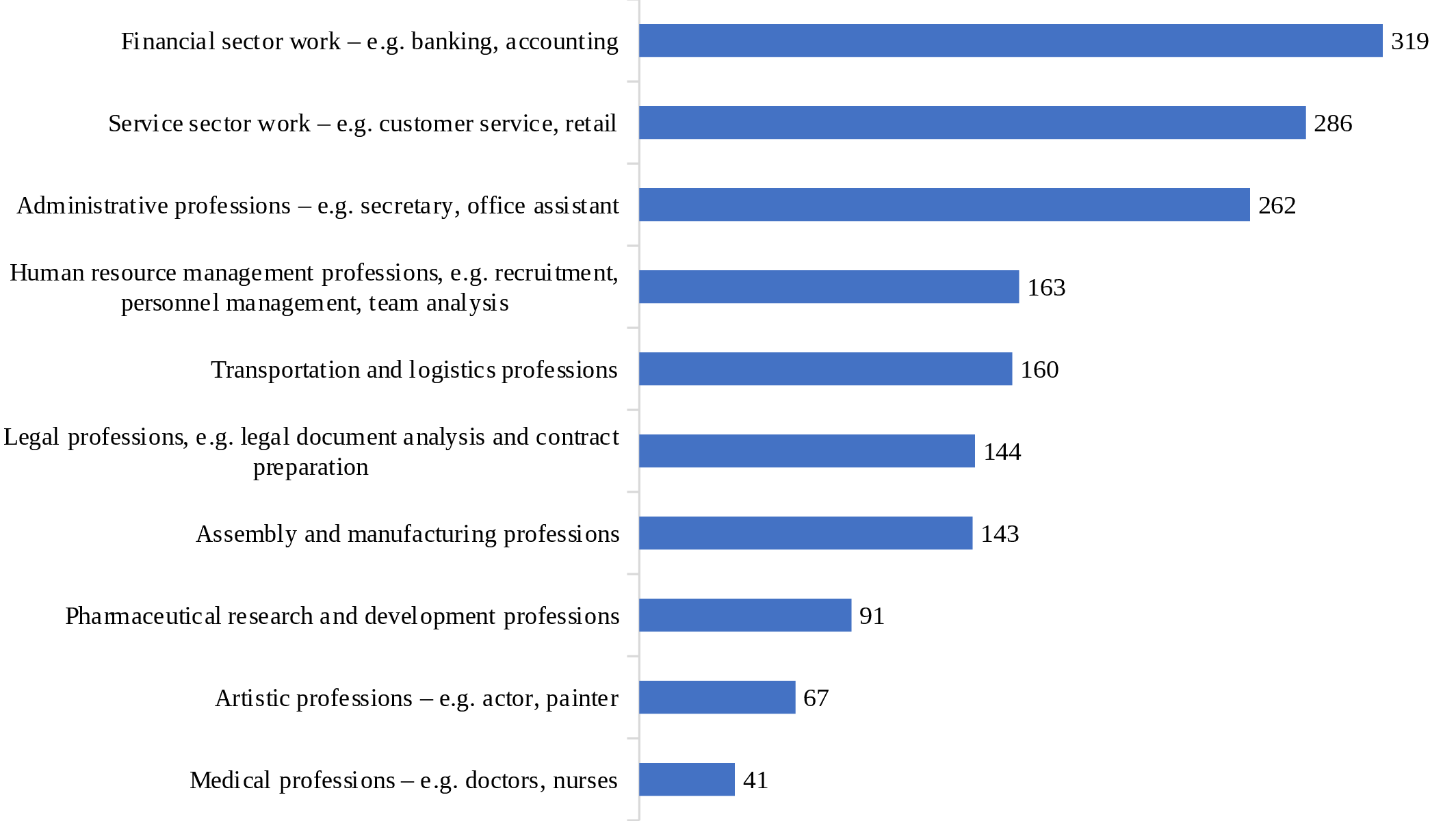
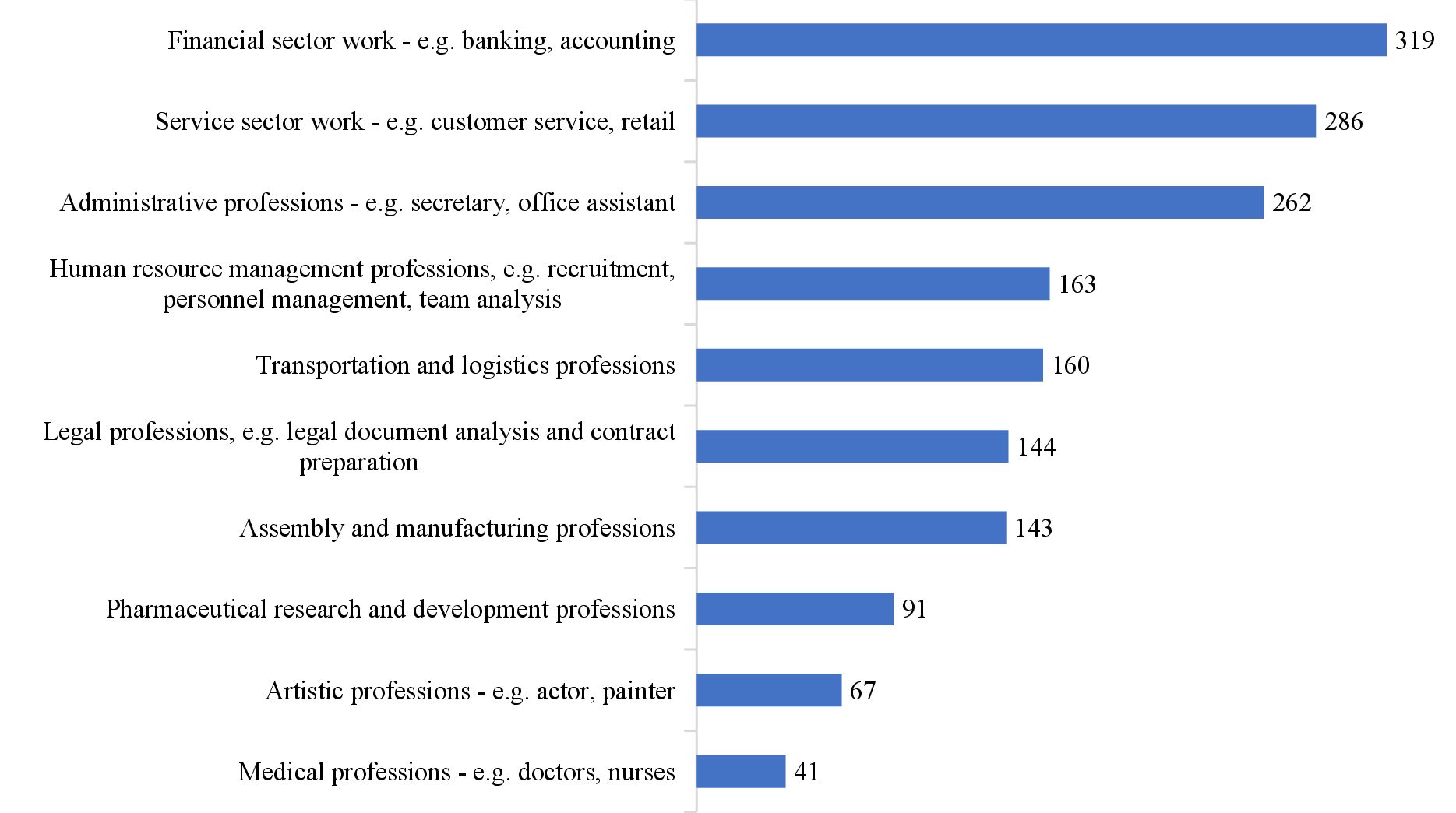
Respondents also identified professional groups most exposed to the impact of AI (see Figure 11; N=514=100%; multiple choice was possible). The most frequent response concerned employment in the financial sector, including banking and accounting (N=319; 62.06%). Work in the service sector, including customer service and retail, received a marginally lower percentage of selections (N=286; 55.64%). The next frequently cited areas were professions related to administration, such as secretarial or office work (N=262; 50.97%), as well as human resources management, e.g., recruitment or team performance analysis (N=163; 31.71%). A significant number of selections were also received by professions related to transport and logistics (N=160; 31.13%) and legal professions, especially in the context of document analysis and the preparation of contracts (N=144; 28.02%). A smaller proportion of respondents selected jobs with a focus on assembly and production (N=143; 27.82%) and research and development in pharmacy (N=91; 17.70%). In the remaining positions, artistic professions, such as acting or painting, were cited in 13.04% of cases (N=67) and medical professions, including doctors and nurses, were cited in 7.98% of cases (N=41). A small number of respondents indicated other professions (N=4; 0.78%).
To summarize, students most frequently identify professions in finance, services, and administration as the most vulnerable to automation. The results indicate that perceived risk is concentrated in occupations involving routine tasks, whereas professions requiring soft skills and creativity are viewed as more resistant to AI-driven transformation.
Students most often identify administrative and service professions (e.g., clerical work, customer service) as most at risk of automation. The work of Lawrence P.W. Wong confirms this conclusion, revealing that routine office roles – such as cashiers, telemarketers, and financial analysts – are particularly susceptible to being replaced by AI.19 A report by Jobs and Skills Australia, cited by The Guardian, also echoes these findings, emphasizing that while almost all professions will be supported by AI in some way, some – such as cleaning, construction, mining, the public sector, and hospitality – will remain relatively safe. At the same time, administrative professions (accountants, receptionists, PR and marketing specialists) are considered particularly vulnerable to the negative effects of automation.20
The findings of this study demonstrate that artificial intelligence constitutes a significant component of the daily lives of university students, predominantly employed in tasks related to data processing, communication and information analysis. The applications cited with the highest frequency were in the fields of computer science, mathematics, economics, and foreign languages. Among AI tools, translators and chatbots dominated. Students perceive AI as a technology that increases convenience and efficiency, but at the same time they express concerns about privacy, data security and the impact on the labor market. Administrative, financial and service professions were identified as being most at risk of transformation, while professions requiring adaptive and soft skills were assessed as being more resistant. The results of the study emphasize the need to enhance digital competencies and prepare students to function in a professional environment that is subject to constant change.
From a practical perspective, the findings carry several implications. For higher education, they highlight the need to incorporate AI-related competencies and critical digital literacy into curricula. For students, they emphasize the need to integrate digital skills into career preparation. Finally, for policymakers and public institutions, the results signal the importance of supporting young people in adapting to a transforming labor market while promoting policies that balance innovation with social responsibility.
In response to the initial research question it should be stated that artificial intelligence is currently an integral part of the digital environment in which the majority of respondents function. The analyses indicate that 64.79% of respondents (N=333) reported using AI-based tools, while 20.61% (N=106) gave a negative answer and 14.60% (N=75) were unable to state their opinion clearly. Despite the prevalence of reported interactions with AI, the intensity of its use exhibits significant variation. The largest group of respondents uses AI sporadically, i.e., less than once a month (24.51%; N=126), however, a significant percentage use these tools daily (23.35%; N=120) or several times a week (19.84%; N=102). The collected data indicate that AI functions mainly as a support tool – most often used for informational, organizational or communication purposes – and less often as a permanent element of everyday academic work. This may indicate a superficial level of use and the need to strengthen competencies, enabling more conscious and systematic implementation of AI in educational practice. The results of the study provide a valuable foundation for future discourse on the evolution of digital policies and academic pedagogy.
In response to the second research question the results indicate that the dominant technologies in everyday life are automatic language translation (N=382; 74.32%), followed by chatbots and virtual assistants (N=265; 51.56%) and multimedia filters (N=256; 49.81%). In the context of both work and study, translators (N=346; 67.32%), chatbots (N=249; 48.44%) and data analysis systems (N=175; 34.05%) were identified as the most beneficial tools. The most frequently indicated areas of AI application included “Computer science and IT” (N=408; 79.37%) and “Mathematics and statistics” (N=312; 60.70%). The findings of this study demonstrate that students predominantly use AI to facilitate information processing, data analysis, and communication, particularly within technical and analytical domains.
In response to the third research question – the results of the study show that artificial intelligence is perceived primarily as a tool that increases convenience in daily life (N=365; 71.01%) and allows for saving time by automating repetitive tasks (N=361; 70.23%). Facilitated communication (N=213; 41.44%) and personalized services (N=159; 30.93%) were also indicated. Concurrently, the surveyed students perceive significant threats associated with the advancement of AI, particularly the potential for excessive reliance on technology (N=349; 67.90%) and the prospect of transformative shifts in the labor market leading to higher levels of unemployment (N=267; 51.95%). Furthermore, a considerable proportion of respondents expressed concern regarding threats to data security (N=242; 47.08%) and privacy violations (N=211; 41.05%). With regard to the impact of AI on career prospects, the majority of students expressed a neutral attitude (N=149; 28.99%) or uncertainty (N=115; 22.37%). Concurrently, a significant proportion of respondents (N=306; 59.53%) agreed with the statement that AI will substitute for certain occupations in the future. The sectors indicated as being most at risk include finance (N=319; 62.06%), services (N=286; 55.64%), and public administration (N=262; 50.97%).
The presented results require contextualization within the broader international literature to better grasp their significance and compare the perception of AI among students in Poland with observations in other countries.
The HEPI report conducted in the UK showed that over half of students regularly use generative AI tools, with translation and chatbot applications dominating21. This result is consistent with the observations in Poland, where similar categories of tools were identified as the most frequently used. However, research by G. Pitts et al. conducted in the United States revealed a clear ambivalence: students appreciate the practical support offered by AI in the learning process, but simultaneously fear a decline in critical thinking skills and problems with the authenticity of academic work22. The team of Ruihua Li, analyzing data from research in Asia, emphasized that AI is increasingly influencing young people’s career aspirations, but is also associated with growing concerns about automation and the need to constantly improve digital skills23. Against this backdrop, the research conducted among Polish students reflects a global trend in which artificial intelligence is perceived as a source of both benefits and threats. On the one hand, AI is viewed as a technology that supports the educational process, facilitating everyday tasks and increasing learning efficiency. On the other hand, concerns about ethics, data security, and the possibility of job losses are clearly visible. The results of international studies indicate that these concerns are not specific to Polish students but constitute a common element in academic and social discussions internationally.
An additional aspect is the difference in emphasis: while in Poland, practical arguments related to the usefulness of AI in everyday studies predominate, American and Asian studies emphasize the ethical and social dimensions more strongly. This suggests that perceptions of artificial intelligence may be partially determined by cultural and economic contexts, and further comparative research could strengthen this analytical perspective.
In summary, the study confirms the high prevalence of AI technologies among students and the growing awareness of both their potential and limitations. The results indicate the necessity for further education in technology, critical reflection on the directions of AI development, and adaptation of curricula to the changing labor market and future competencies.
The study presented here, while providing valuable empirical data, is not without its limitations, which must be considered when interpreting the results. First, the research sample was limited to students from three universities, which may limit the generalizability of the results to the entire academic population in Poland. It is important to acknowledge that the self-reported nature of the responses may not fully capture the respondents’ actual behavior regarding to AI technology. Furthermore, given the dynamic evolution of tools based on artificial intelligence, it is possible that students’ attitudes and competencies may undergo rapid transformation. This underscores the need for additional, repeated research in this domain.
Future studies should encompass a more extensive and varied sample of students from a range of universities and disciplines. It is also recommended that qualitative analysis be deepened, to better capture the motivations, barriers, and contexts of AI usage in daily and professional life. Another significant research area pertains to the evaluation of the efficacy of educational focuses on intelligent technologies and its impact on students’ readiness to work in the digital environment.
The empirical findings confirm that artificial intelligence is becoming a significant component of students’ daily lives, both in personal and professional domains. At the same time, the modes and intensity of its use remain diverse and largely dependent on the nature of their activities. Respondents emphasize the dominant role of tools supporting communication, translation, and work organization, while also revealing ambivalent attitudes: on the one hand, recognizing tangible benefits such as time savings and enhanced productivity, and on the other, expressing concerns related to data security, technological dependence, and potential labor market disruptions.
The scientific contribution of this study lies in its empirical depiction of the young generation’s perceptions of a technology that increasingly shapes social, economic, and educational processes. The results provide relevant implications for both academic pedagogy and the formulation of public policies aimed at strengthening digital competencies and integrating innovative educational solutions.
The issues addressed open avenues for further investigation, including qualitative inquiries into motivations, barriers, and attitudes toward AI, as well as comparative studies conducted across different socio-cultural and professional contexts. The findings may also serve as a reference point for designing educational and developmental initiatives that foster a more conscious, critical, and responsible use of artificial intelligence in the future.
Legal acts
Regulation (EU) 2024/1689 of the European Parliament and of the Council of 13 June 2024 laying down harmonised rules on artificial intelligence and amending Regulations (EC) No 300/2008, (EU) No 167/2013, (EU) No 168/2013, (EU) 2018/858, (EU) 2018/1139 and (EU) 2019/2144 and Directives 2014/90/EU, (EU) 2016/797 and (EU) 2020/1828 (Artificial Intelligence Act) (Text with EEA relevance): Official Journal of the European Union L 2024/1689, 12.07.2024.
Uchwała nr 196 Rady Ministrów z dnia 28 grudnia 2020 r. w sprawie ustanowienia „Polityki dla rozwoju sztucznej inteligencji w Polsce od roku 2020”, Załącznik nr 1, s. 78: “Monitor Polski,” 2021 poz. 23, https://isap.sejm.gov.pl/isap.nsf/DocDetails.xsp?id=WMP20210000023 [access: 4.04.2025].
Literature
Bierzyński T., Integracja sztucznej inteligencji w życiu rodzinnym: perspektywy wykorzystania technologii AI na rzecz rozwoju osobistego i zawodowego, „Szkoła – Zawód – Praca,” 2024, no. 28, pp. 57–65, https://doi.org/10.34767/SZP.2024.02.04.
Dwivedi Y.K. et al., Artificial Intelligence (AI): Multidisciplinary Perspectives on Emerging Challenges, Opportunities, and Agenda for Research, Practice and Policy, “International Journal of Information Management,” 57 (2021), 101994, https://doi.org/10.1016/j.ijinfomgt.2019.08.002.
Freeman J., Student Generative AI Survey 2025, “HEPI Policy Note,” 61 (2025), https://www.hepi.ac.uk/2025/02/26/student-generative-ai-survey-2025 [access: 25.08.2025].
Kaplan A., Haenlein M., Rulers of the World, Unite! The Challenges and Opportunities of Artificial Intelligence, “Business Horizons,” 63 (2020), no. 1, pp. 37–50, https://doi.org/10.1016/j.bushor.2019.09.003.
Kostecka M., Sztuczna inteligencja – co to jest i co potrafi? in: Sztuczna inteligencja. Prawdziwe zmiany w edukacji, eds. J. Pyżalski, A. Łuczyńska, Warszawa 2024, s. 6–13.
Li R., Ouyang S., Lin J., Mediating Effect of AI Attitudes and AI Literacy on the Relationship Between Career Self-Efficacy and Job-Seeking Anxiety, “BMC Psychology,” 13 (2025), 454. https://doi.org/10.1186/s40359-025-02757-2.
Naamati-Schneider L., Enhancing AI Competence in Health Management: Students’ Experiences with ChatGPT as a Learning Tool, “BMC Medical Education,” 24 (2024), 598, https://doi.org/10.1186/s12909-024-05595-9.
Pitts G., Marcus V., Motamedi S., Student Perspectives on the Benefits and Risks of AI in Education, 2025, preprint, https://arxiv.org/pdf/2505.02198 [access: 24.08.2025].
Russell S., Norvig P., Artificial Intelligence: A Modern Approach, 4th ed., Harlow 2022.
Wong L.P.W, Artificial Intelligence and Job Automation: Challenges for Secondary Student’s Career Development and Life Planning, “Merits,” 4 (2024), no. 4, pp. 370–399, https://doi.org/10.3390/merits4040027.
Zalewski T., Definicja sztucznej inteligencji, in: Prawo sztucznej inteligencji, eds. L. Lai, M. Świerczyński, Warszawa 2020, s. 1–3.
Zheng L., Xiao Y., Refining AI Perspectives: Assessing the Impact of AI Curricular on Medical Students’ Attitudes Towards Artificial Intelligence, “BMC Medical Education,” 25 (2025), 1115, https://doi.org/10.1186/s12909-025-07669-8.
Zhu H., Sun Y., Yang J., Towards Responsible Artificial Intelligence in Education: A Systematic Review on Identifying and Mitigating Ethical Risks, “Humanities and Social Sciences Communications,” 12 (2025), 1111, https://doi.org/10.1057/s41599-025-05252-6.
Internet sources
Annual Report 2023, CD Projekt RED, https://www.cdprojekt.com [access: 24.04.2025].
Jobs and Skills Australia, AI Is Not Going to Steal Your Job – Not If You Work in Cleaning, Construction or Hospitality, “The Guardian,” August 13, 2025, https://www.theguardian.com/business/2025/aug/14/ai-artificial-intelligence-jobs-cleaning-construction-hospitality-australian-report [access: 22.08.2025].
Lund S. et al., The Future of Work After COVID-19: Implications for AI and Automation, McKinsey Global Institute, 2021, https://www.mckinsey.com/featured-insights/future-of-work/the-future-of-work-after-covid-19 [access: 4.04.2025].
OECD, Recommendation of the Council on Artificial Intelligence, OECD/LEGAL/0449, 2019, https://oecd.ai/en/assets/files/OECD-LEGAL-0449-en.pdf [access: 1.05.2025].
Trust, Attitudes and Use of Artificial Intelligence: A Global Study 2025, The University of Melbourne & KPMG International, 2025, https://kpmg.com/xx/en/our-insights/ai-and-technology/trust-attitudes-and-use-of-ai.html [access: 24.08.2025].
1 OECD, Recommendation of the Council on Artificial Intelligence, OECD/LEGAL/0449 2019, https://oecd.ai/en/assets/files/OECD-LEGAL-0449-en.pdf [access: 01.05.2025].
2 Regulation (EU) 2024/1689 of the European Parliament and of the Council of 13 June 2024 laying down harmonised rules on artificial intelligence and amending Regulations (EC) No 300/2008, (EU) No 167/2013, (EU) No 168/2013, (EU) 2018/858, (EU) 2018/1139 and (EU) 2019/2144 and Directives 2014/90/EU, (EU) 2016/797 and (EU) 2020/1828 (Artificial Intelligence Act) (Text with EEA relevance): Official Journal of the European Union L 2024/1689, 12.7.2024.
3 S. Russell, P. Norvig, Artificial Intelligence: A Modern Approach, 4th ed., Harlow 2022, pp. 19–20.
4 A. Kaplan, M. Haenlein, Rulers of the World, Unite! The Challenges and Opportunities of Artificial Intelligence, “Business Horizons,” 63 (2020), no. 1, pp. 37–50, https://doi.org/10.1016/j.bushor.2019.09.003.
5 T. Zalewski, Definicja sztucznej inteligencji, in: Prawo sztucznej inteligencji, eds. L. Lai, M. Świerczyński, Warszawa 2020, pp. 1–3.
6 M. Kostecka, Sztuczna inteligencja – co to jest i co potrafi? in: Sztuczna inteligencja. Prawdziwe zmiany w edukacji, eds. J. Pyżalski, A. Łuczyńska, Warszawa 2024, p. 6.
7 Uchwała nr 196 Rady Ministrów z dnia 28 grudnia 2020 r. w sprawie ustanowienia „Polityki dla rozwoju sztucznej inteligencji w Polsce od roku 2020”, Załącznik nr 1, s. 78: “Monitor Polski,” 2021 poz. 23, https://isap.sejm.gov.pl/isap.nsf/DocDetails.xsp?id=WMP20210000023 [access: 4.04.2025].
8 S. Lund et al., The Future of Work After COVID-19: Implications for AI and Automation, McKinsey Global Institute, 2021, https://www.mckinsey.com/featured-insights/future-of-work/the-future-of-work-after-covid-19 [access: 4.04.2025].
9 Trust, Attitudes and Use of Artificial Intelligence: A Global Study 2025, The University of Melbourne & KPMG International, 2025, https://kpmg.com/xx/en/our-insights/ai-and-technology/trust-attitudes-and-use-of-ai.html [access: 24.08.2025].
10 Y.K. Dwivedi et al., Artificial Intelligence (AI): Multidisciplinary Perspectives on Emerging Challenges, Opportunities, and Agenda for Research, Practice and Policy, “International Journal of Information Management,” 57 (2021), 101994, https://doi.org/10.1016/j.ijinfomgt.2019.08.002.
11 G. Pitts, V. Marcus, S. Motamedi, Student Perspectives on the Benefits and Risks of AI in Education, 2025, preprint, https://arxiv.org/pdf/2505.02198 [access: 24.08.2025].
12 T. Bierzyński, Integracja sztucznej inteligencji w życiu rodzinnym: perspektywy wykorzystania technologii AI na rzecz rozwoju osobistego i zawodowego, „Szkoła – Zawód – Praca,” 2024, no. 28, pp. 57–65, https://doi.org/10.34767/SZP.2024.02.04.
13 J. Freeman, Student Generative AI Survey 2025, “HEPI Policy Note,” 61 (2025), https://www.hepi.ac.uk/2025/02/26/student-generative-ai-survey-2025 [access: 24.08.2025].
14 G. Pitts, V. Marcus, S. Motamedi, Student Perspectives on the Benefits and Risks of AI in Education.
15 H. Zhu, Y. Sun, J. Yang, Towards Responsible Artificial Intelligence in Education: A Systematic Review on Identifying and Mitigating Ethical Risks, “Humanities and Social Sciences Communications,” 12 (2025), 1111, https://doi.org/10.1057/s41599-025-05252-6.
16 R. Li, S. Ouyang, J. Lin, Mediating Effect of AI Attitudes and AI Literacy on the Relationship Between Career Self-Efficacy and Job-Seeking Anxiety, “BMC Psychology,” 13 (2025), 454, https://doi.org/10.1186/s40359-025-02757-2.
17 L. Naamati-Schneider, Enhancing AI Competence in Health Management: Students’ Experiences with ChatGPT as a Learning Tool, “BMC Medical Education,” 24 (2024), 598, https://doi.org/10.1186/s12909-024-05595-9.
18 L. Zheng, Y. Xiao, Refining AI Perspectives: Assessing the Impact of AI Curricular on Medical Students’ Attitudes Towards Artificial Intelligence, “BMC Medical Education,” 25 (2025), 1115, https://doi.org/10.1186/s12909-025-07669-8.
19 L.P.W. Wong, Artificial Intelligence and Job Automation: Challenges for Secondary Students’ Career Development and Life Planning, “Merits,” 4 (2024), no. 4, pp. 370–399, https://doi.org/10.3390/merits4040027.
20 Jobs and Skills Australia, AI Is Not Going to Steal Your Job – Not If You Work in Cleaning, Construction or Hospitality, “The Guardian,” August 13, 2025, https://www.theguardian.com/business/2025/aug/14/ai-artificial-intelligence-jobs-cleaning-construction-hospitality-australian-report [access: 22.08.2025].
21 J. Freeman, Student Generative AI Survey 2025.
22 G. Pitts, V. Marcus, S. Motamedi, Student Perspectives on the Benefits and Risks of AI in Education.
23 R. Li, S. Ouyang, J. Lin, Mediating Effect of AI Attitudes.